Garzed press resources
Everything on this page (copy, photos, screenshots, logos) is free to use in coverage of Garzed. Questions, interviews, or anything missing: brad@garzed.com.
The one-liner
Garzed keeps an eye on the soil in home gardens and lawns and waters when the plants need it, so the gardener doesn't have to remember or guess. It measures how much water each area's soil holds and uses a plant library to decide when to water.
Boilerplate
Garzed is a web app that waters home gardens and lawns when the soil needs it. It closes the loop between wireless soil-moisture sensors and smart watering valves: it reads Ecowitt soil sensors, learns each area's soil capacity from its own readings, and drives Rachio and LinkTap valves and sprinkler controllers to do the watering. Its Schedule mode runs timed watering instead, with rain skips from an on-site weather station or the local forecast. Around the watering core, Garzed keeps a living planting calendar, projects harvests from local growing-degree units, and records the season in a photo journal. It runs entirely on off-the-shelf hardware, with no hub of its own, and was built by solo founder Bradley Ferrada for his own garden. Garzed is at garzed.com.
Fast facts
The founder story

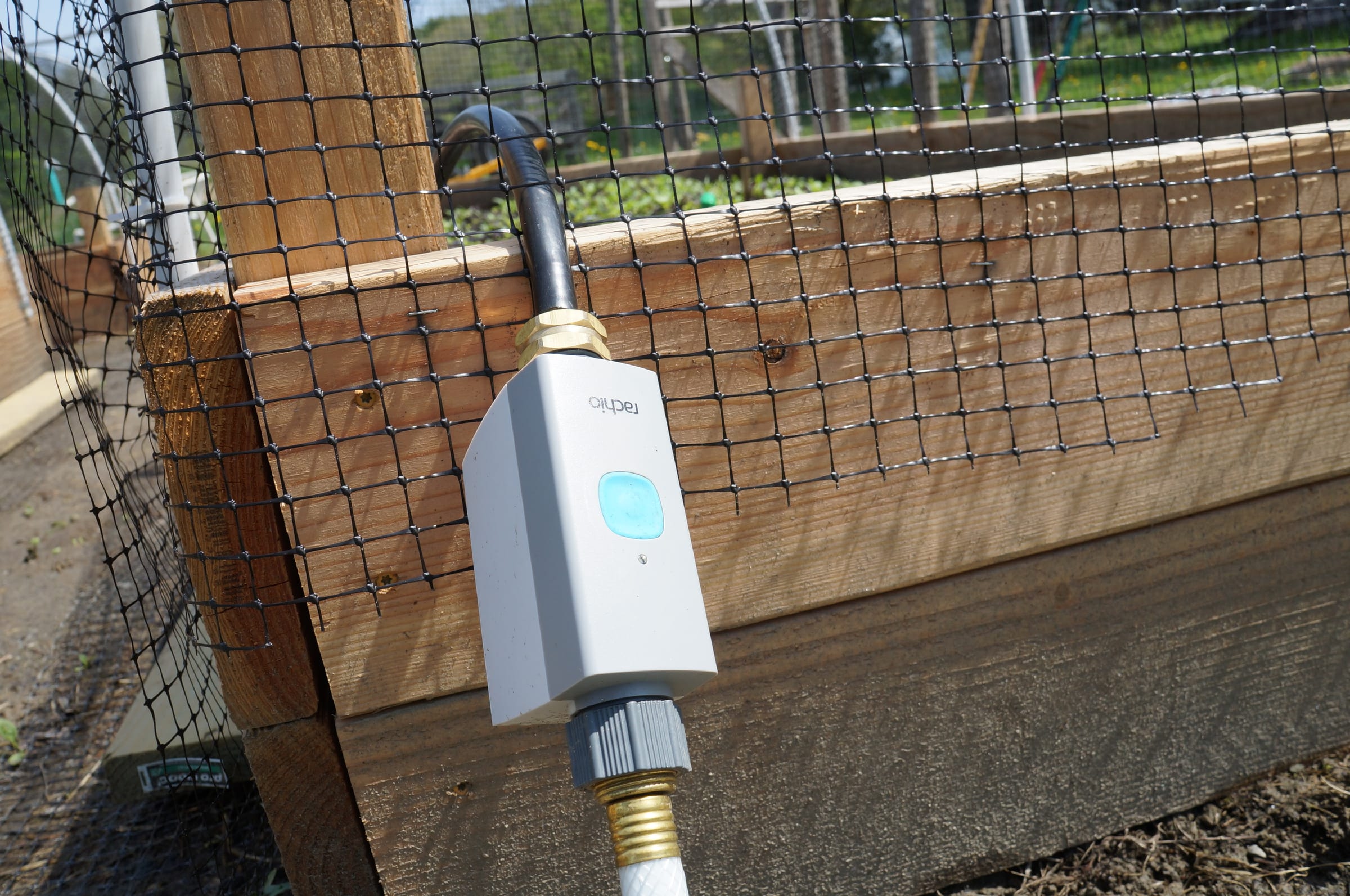
I put my garden hose on a Rachio smart valve so I'd stop walking down to water every day. The schedule worked, but I never knew if my plants were getting the right amount. Some areas got soaked, others stayed dry.
After a season of that, I went looking for something better: a system that would water based on what the soil actually needed. The closest things I found used a soil sensor to skip a scheduled run; anything that really watered from the soil was a wired commercial setup, with sensors and pumps you have to install in the ground.
I just wanted my hose, my valve, and a sensor in the dirt to all talk to each other. So I started building it. Garzed is what I wanted for my own garden: it watches your soil moisture, waters in short pulses, checks again, and stops when it's right.
Photos
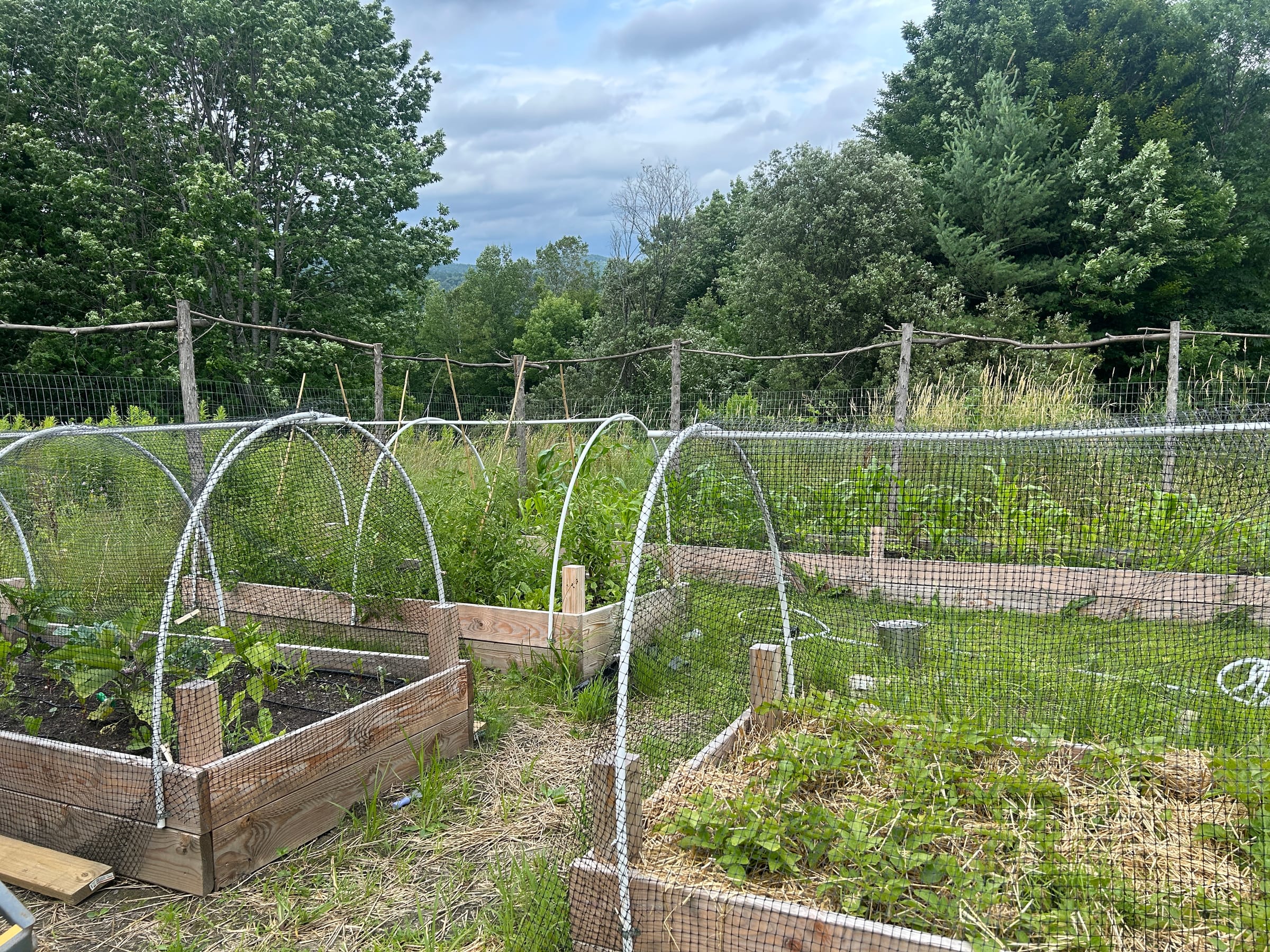
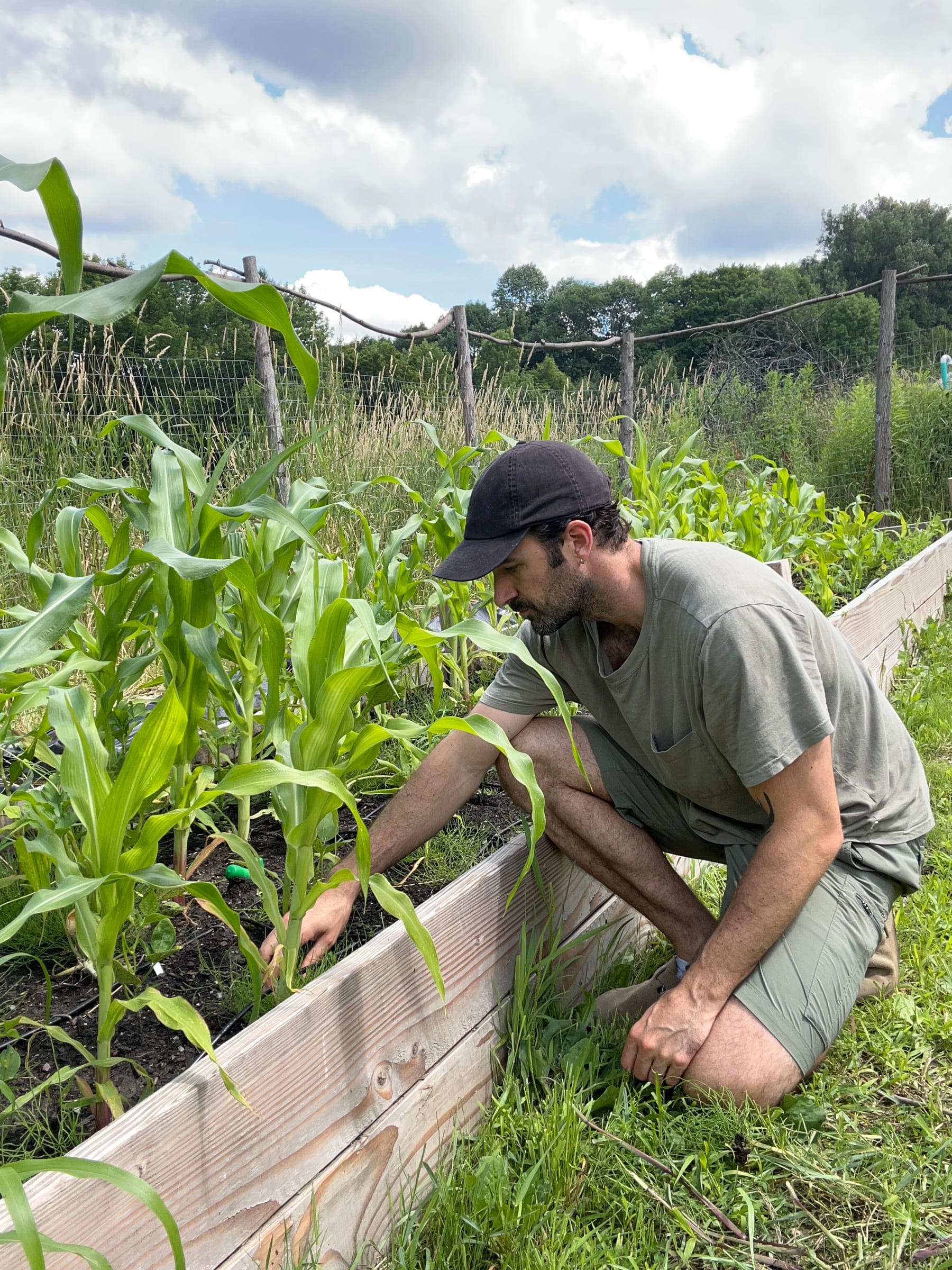
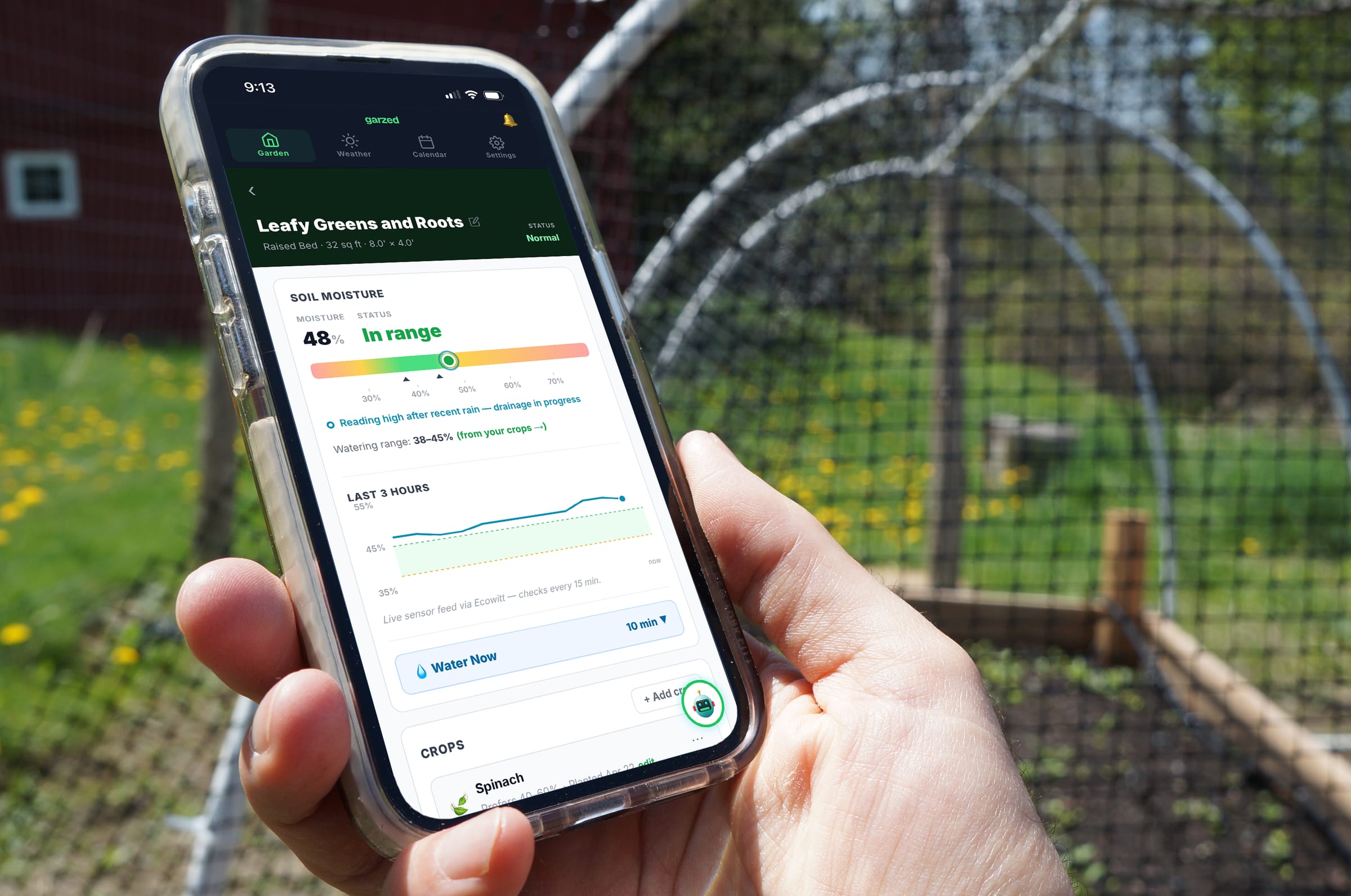
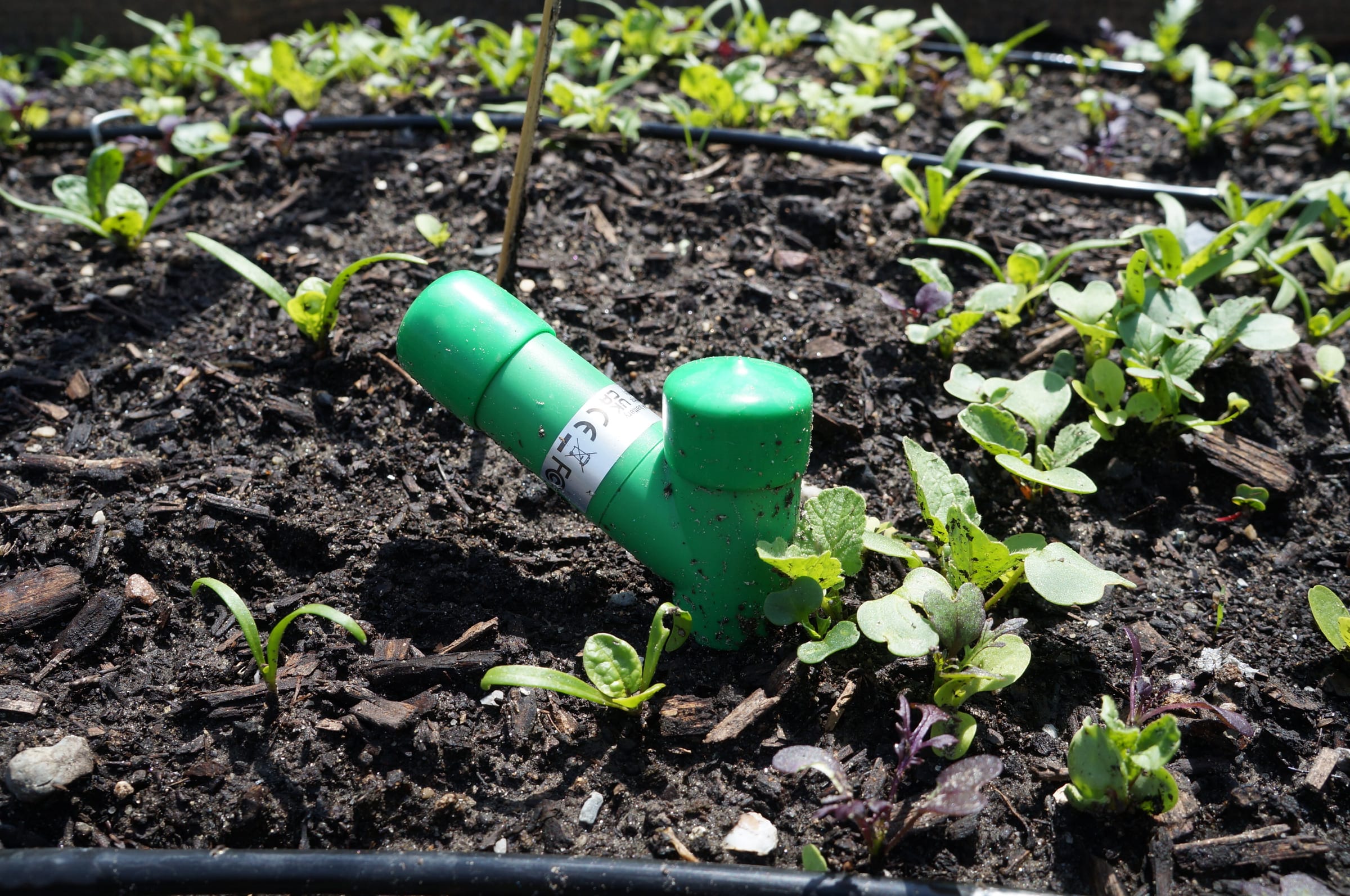
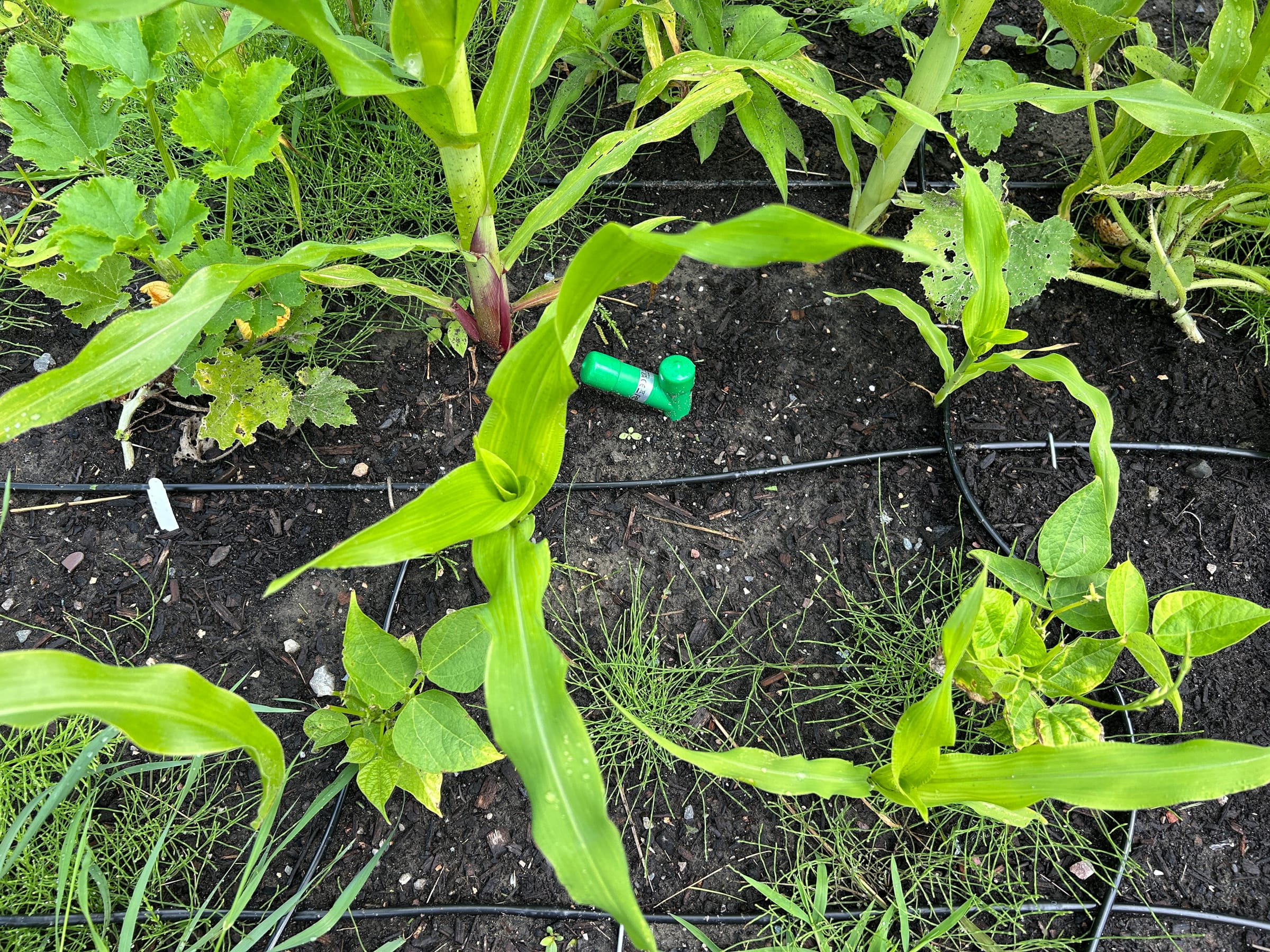
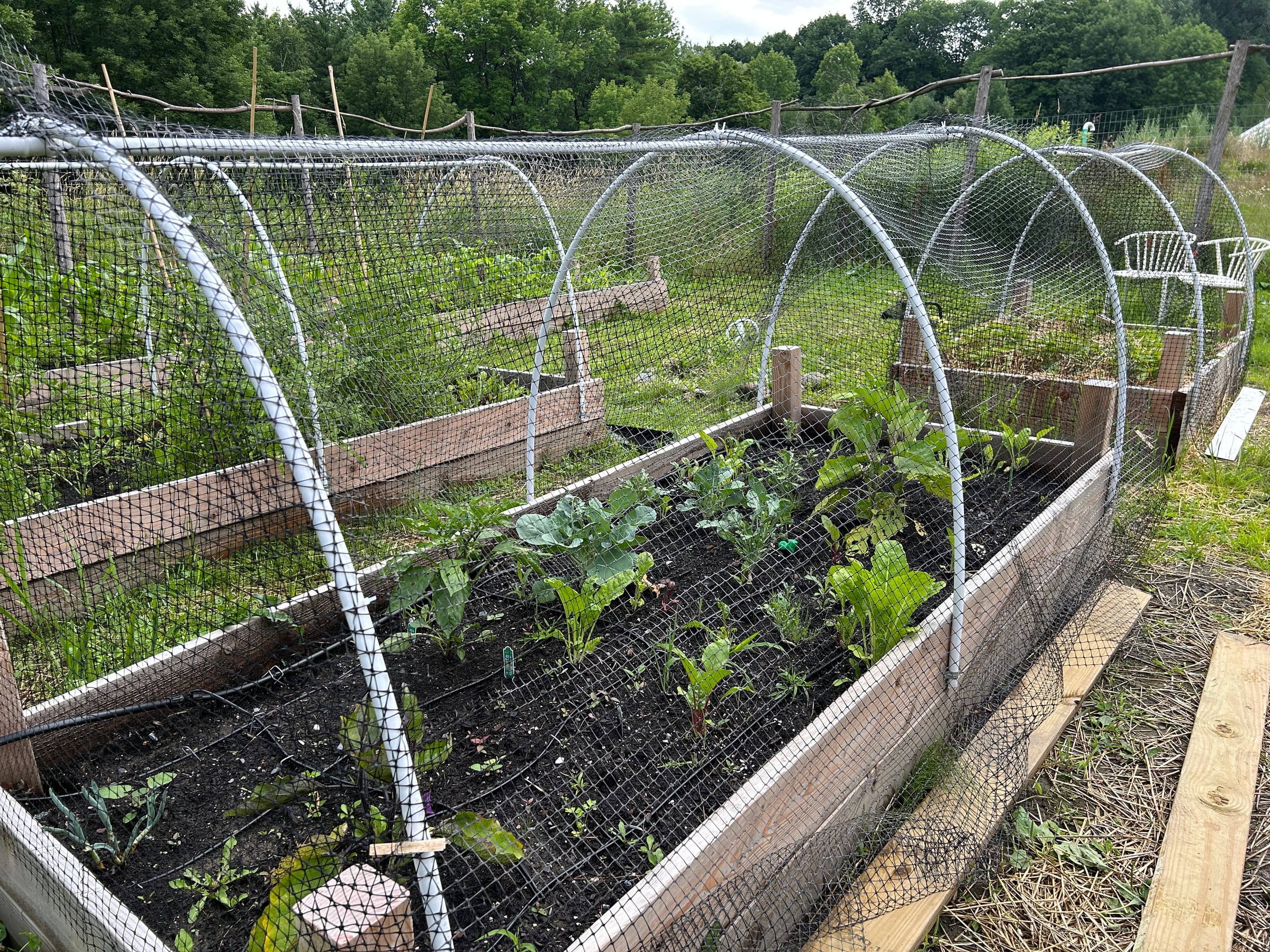
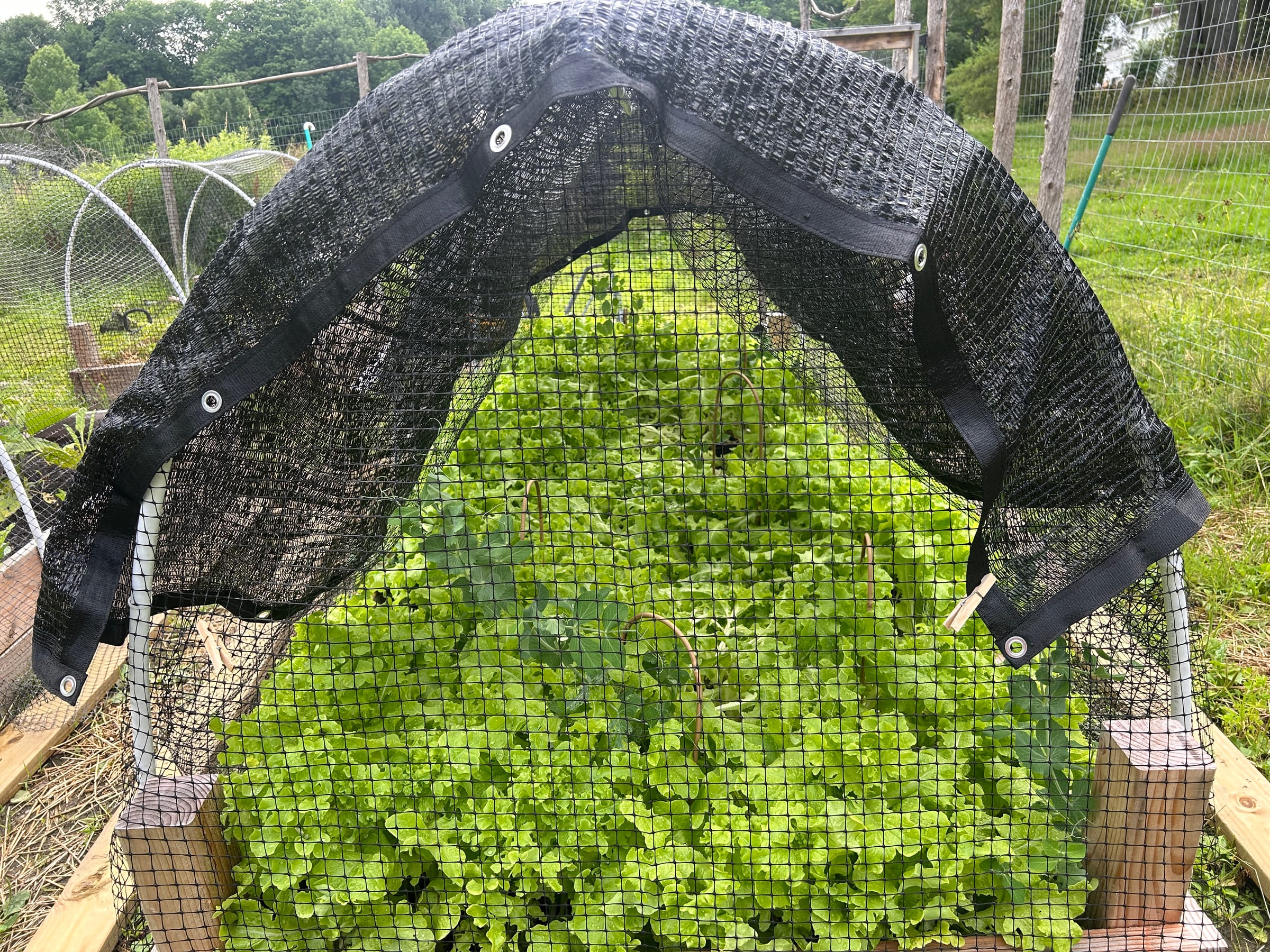
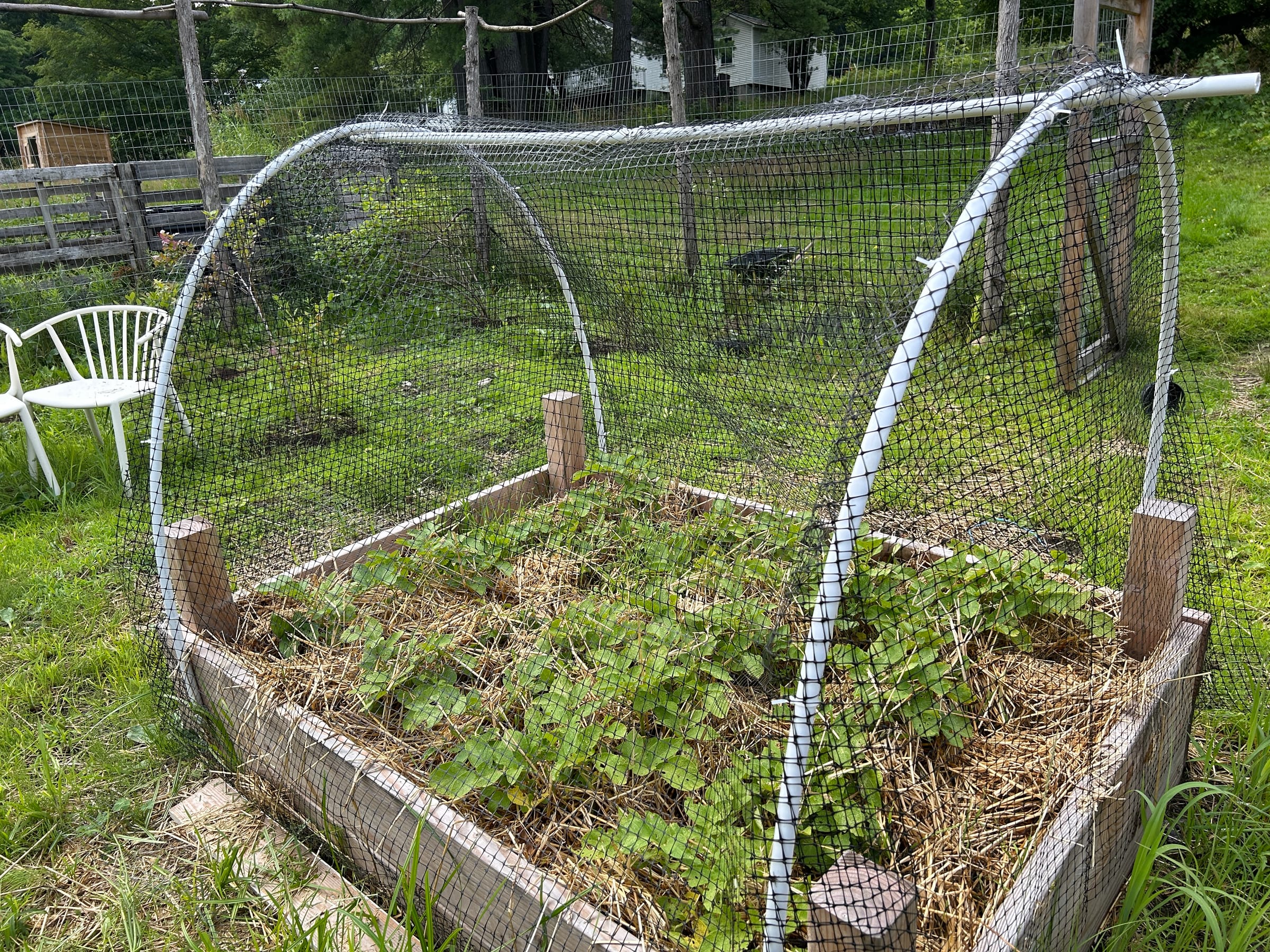
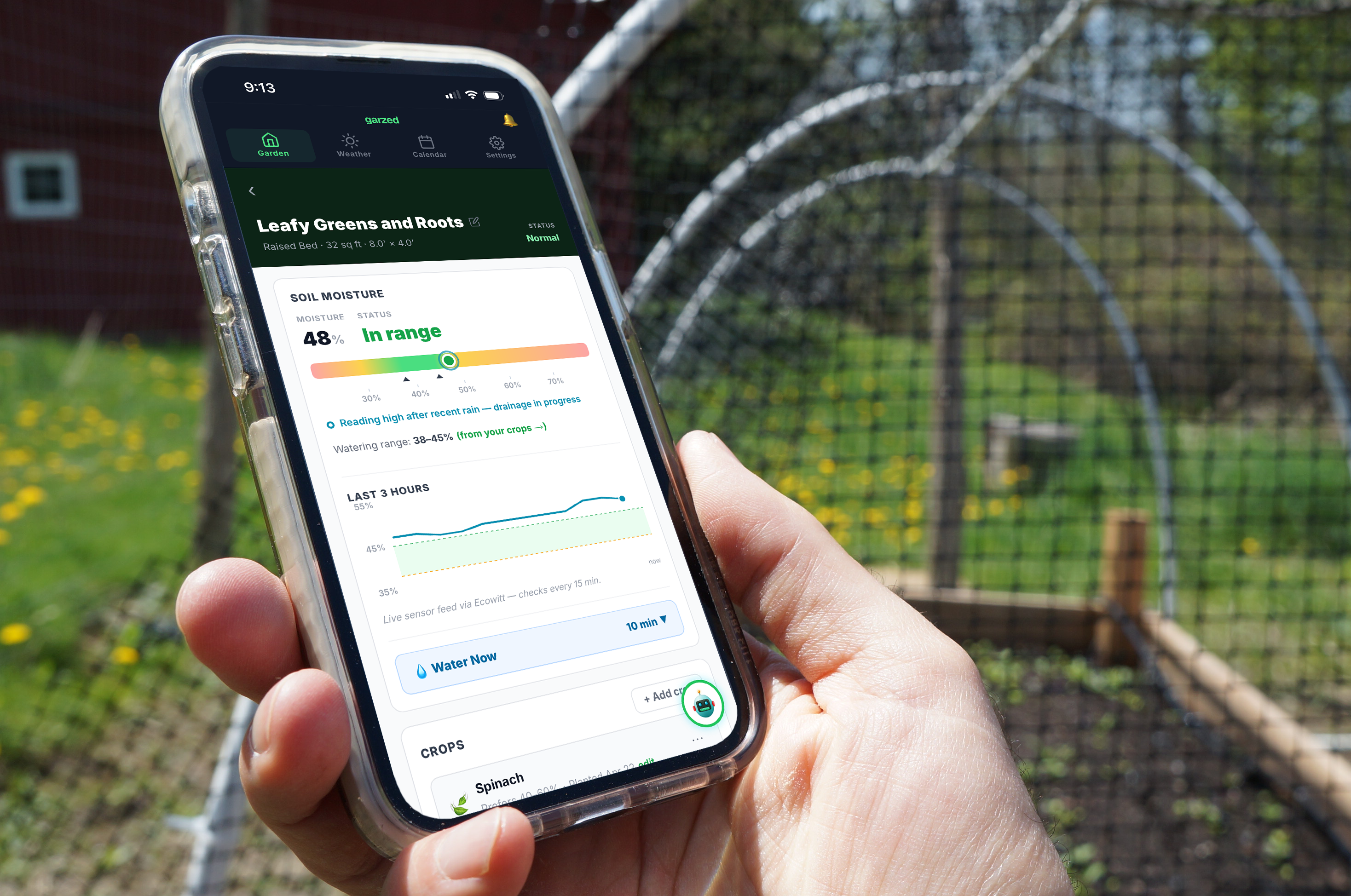
The founder's Vermont garden, the one Garzed was built for and runs on, shot in May (first plantings) and July (grown in). Click any image for the full-size file. Free for editorial use; credit “Garzed”.
Screenshots
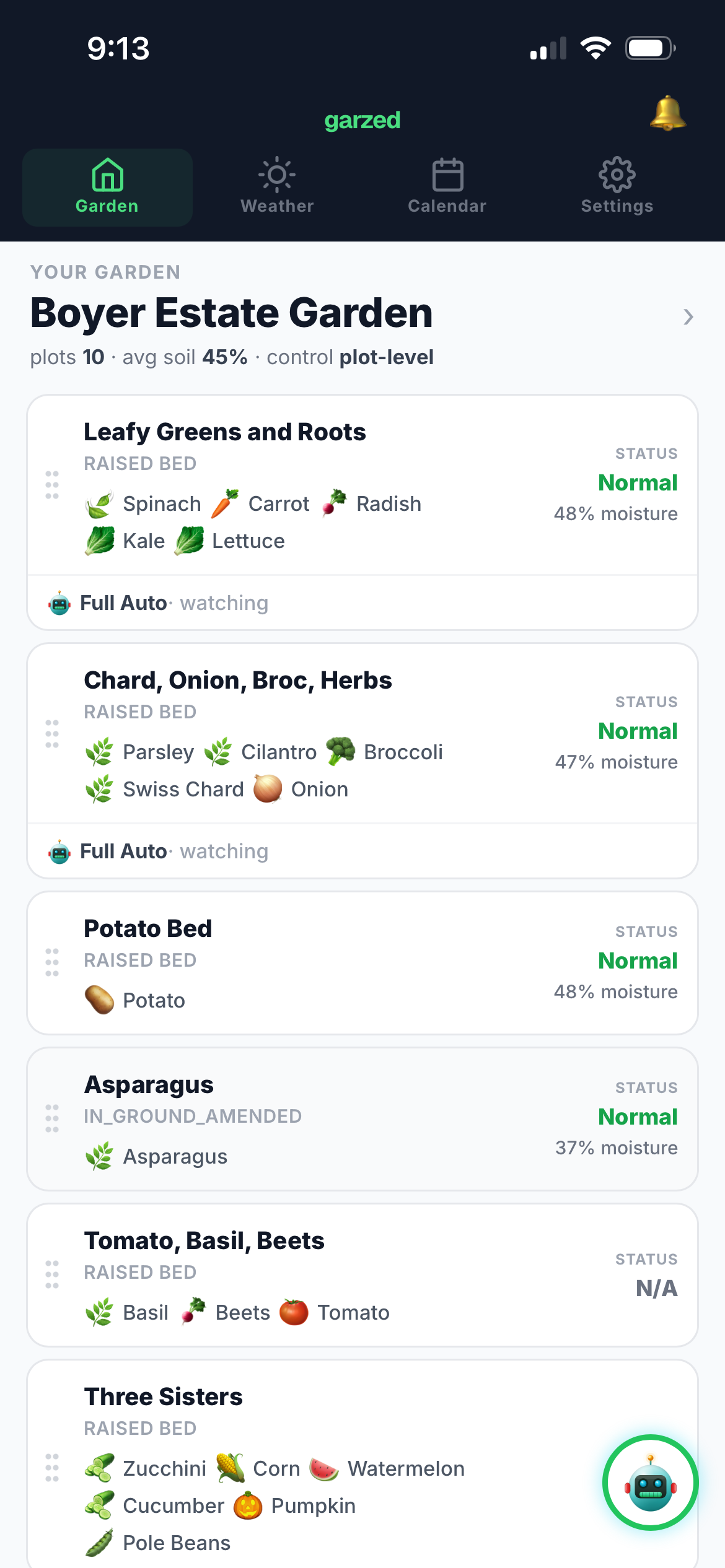
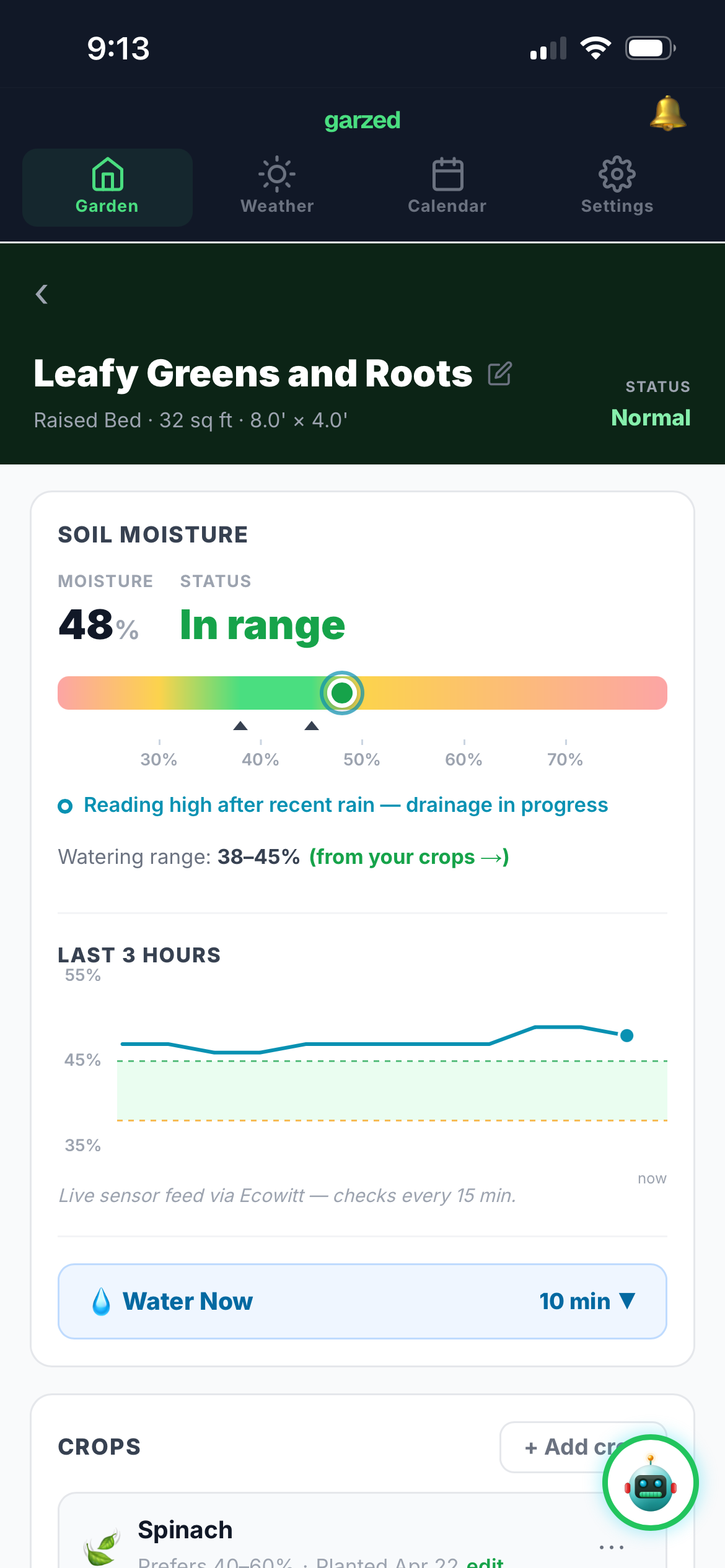
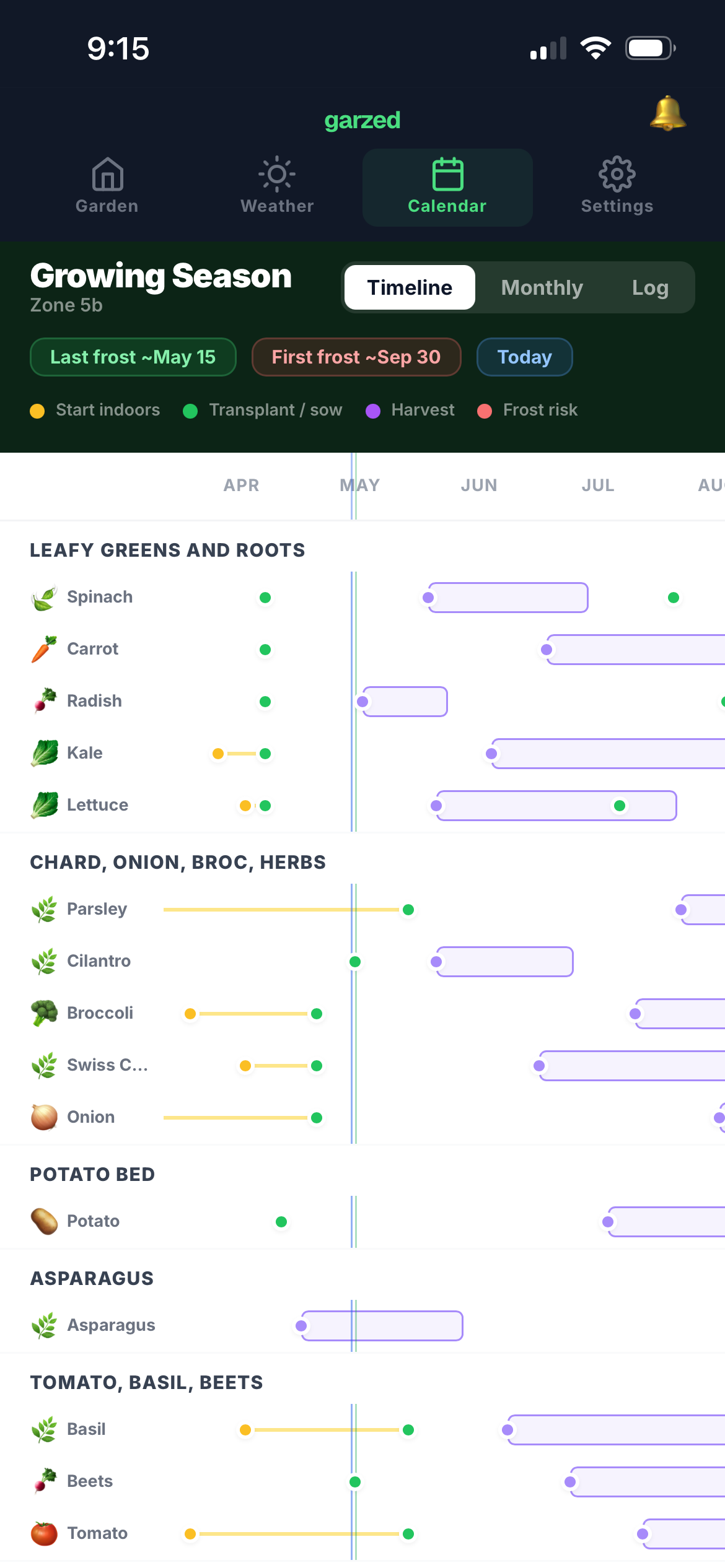
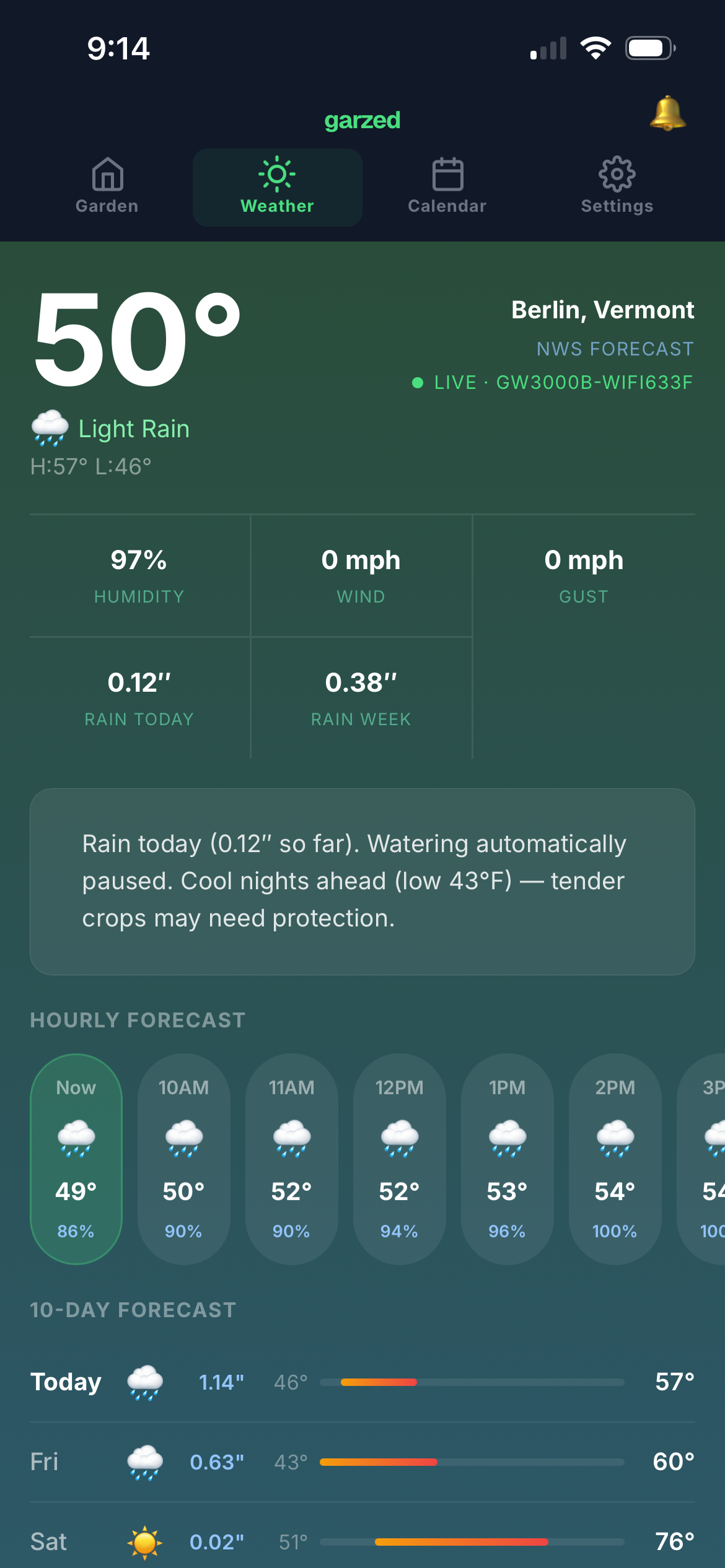
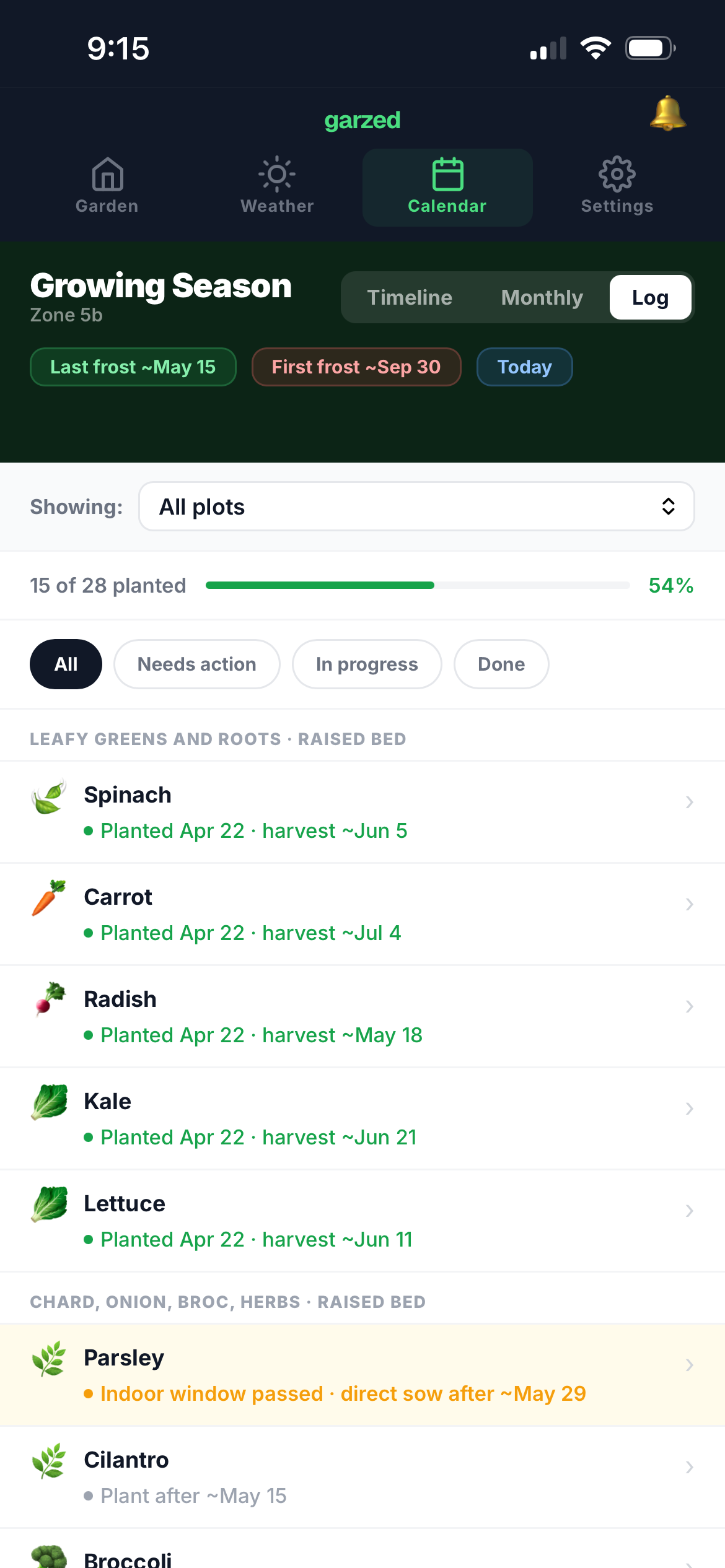
Real product screenshots. Click any image for the full-size file.
Logo
The Garzed mark, in PNG and SVG. The wordmark is the name set in Geist Bold.

Founder quotes, on the record
“I'm checking in less even though the days are hotter. I trust the system is going to water when it needs to, and I trust I'll get a notification if something needs my attention.” Brad Ferrada
“I never would have pursued this without AI coding tools. The alternatives were convincing a coder of the idea - and that an industrial designer had value driving its development - or hiring one at great expense. Neither is a path I would have taken. This simply wouldn't exist.” Brad Ferrada
“Claude Code is incredibly powerful - what I've built in months would have taken much longer built conventionally. But that's not to say it's built with a couple of prompts. It has taken an immense individual effort of iteration, critique, insight, and ongoing work.” Brad Ferrada
“This began with a search. I was interested in automating my watering beyond a schedule, and I searched for exactly what I'm now building - a wireless valve, a wireless soil sensor, and the two automating the watering together based on soil moisture. All I could find were hard-wired systems. I saw the opportunity.” Brad Ferrada
“What surprised me is that we couldn't count on the soil readings out of the box. Sensors read differently, and they aren't measuring a true moisture number. That became the impetus for a calibration system that learns each bed's soil and waters on horticultural principles - dry-down from soil capacity.” Brad Ferrada
“I see my soil conditions day to day, and there are many days when watering isn't necessary. By that logic, watering on a daily schedule may actually be stressing your plants unnecessarily - not to mention the wasted water.” Brad Ferrada
“I want to reward these early adopters' faith in Garzed. They are trusting their plants with this software.” Brad Ferrada
Two story angles
Checking in less. Brad checks on his garden less even as the days get hotter: it waters when the soil calls for it, and he trusts a notification will come if something needs him.
Built for his own garden. Brad is user number one: Garzed's calibration ideas came from his own areas misbehaving, and its guidance is graded against what his garden actually does.
What makes it different
Smart sprinkler controllers adjust schedules from weather forecasts. Sensor watering systems such as Netro, Moen and RainPoint act on a soil reading, at a moisture level the owner picks and tunes. Garzed measures each area's own soil, because raw sensor percentages aren't comparable area to area, then starts watering when that area's plants need it and stops at its measured capacity. It does this with off-the-shelf hardware from different companies: Ecowitt makes the sensors, and Rachio and LinkTap make the valves. Garzed is the part in between that turns them into one system.