Moisture range
35–55%
Days to maturity
40–60
Light
Full sun
Growing Degree Units
650 · base 40°F
When to plant turnip where you garden
Indoor-start, transplant and harvest dates, counted from your own frost dates.
Place search © OpenStreetMap contributors
Growing notes
Drought stress can make turnips and rutabagas bitter or woody. As the roots become larger, they are more likely to become bitter, strong-flavored, woody or fibrous.
Harvest signs
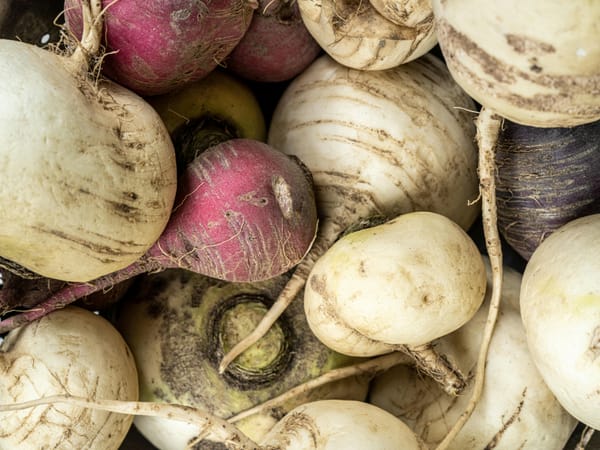
Harvest turnips when they reach a usable size, normally about two to three inches in width. Their shoulders are usually above the soil surface, so it is easy to tell how big they are.
▶Planting reference— Depth, spacing, pH, light
▶Pests & diseases— root maggots, flea beetles, cabbage maggots, alternaria, +2 more
Common pests · 3
Companions & antagonists
Plant near:PeasLettuce
Tip: Cool-season — spring or fall. Greens edible too.
Common questions
How much water does turnip need?
Turnip has middle-of-the-road water needs. Aim to keep soil moisture around 35–55%, letting the top inch dry slightly between waterings rather than staying soggy.
Can I grow turnip in a raised bed or container?
Yes — turnip does well in raised beds and is happy in a decent-sized container too, as long as drainage is good.
Does turnip come back every year?
No — turnip is an annual. It completes its life in one season, so you replant it each year.