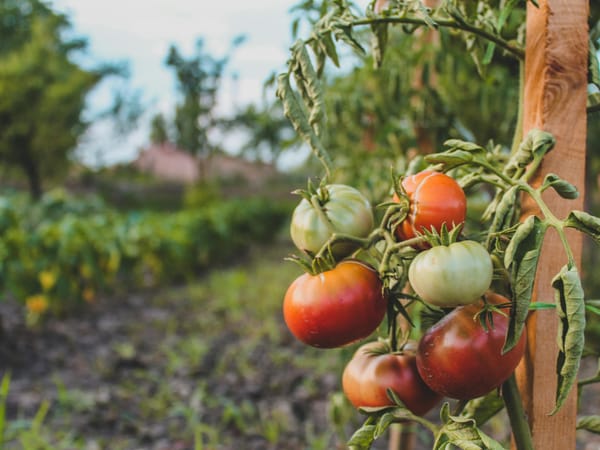
Tomatoes are heat-loving plants that require a long, frost-free season and full sun. Transplant outdoors after all danger of frost has passed and the soil has warmed.
Harvest fruit when they have reached a usable size and color. Pick carefully from the plant when the entire fruit is a uniform color. When ripe, the fruit will be slightly soft to the touch, rather than firm or hard like unripe green tomatoes.
1.5-2 feet apart for indeterminate cultivars that are staked, 2-3 feet apart if grown in wire cages, 3-4 feet apart if allowed to sprawl · Rows: 4-5 feet apart
Cutworms:can cut young tomato plants off at the base↗
Flea beetles:small, quick-moving insects whose feeding leads to many small holes in leaves↗
Colorado potato beetle:larvae and adults feed on leaves↗
Aphids:can colonize tomato plants in large numbers. You may notice leaf curling, discoloration, and sticky leaves↗
Sap beetles:feeding in the fruit if tomato fruits are already damaged↗
Tomato hornworm:large caterpillars that feed on leaves and fruit↗
Common diseases · 4
Early blight:causes leaf spotting and occasional fruit rot↗
Septoria leaf spot:causes numerous, small spots on leaves↗
Tomato viruses:cause off-coloring and weird patterns in tomato leaves and fruit, as well as distortion of all plant parts↗
Bacterial spot:can cause spots on leaves and fruit↗
Companions & antagonists
Plant near:BasilCarrotMarigold
Keep apart from:FennelBrassica
Tip: Plant basil nearby for pest protection.
Common questions
How much water does tomato need?
Tomato is fairly drought-tolerant once established and can dry out further between waterings. A soil-moisture range of about 35–55% is plenty — overwatering does more harm than a little dryness.
Can I grow tomato in a raised bed or container?
Yes — tomato does well in raised beds and is happy in a decent-sized container too, as long as drainage is good.
Does tomato come back every year?
No — tomato is an annual. It completes its life in one season, so you replant it each year.