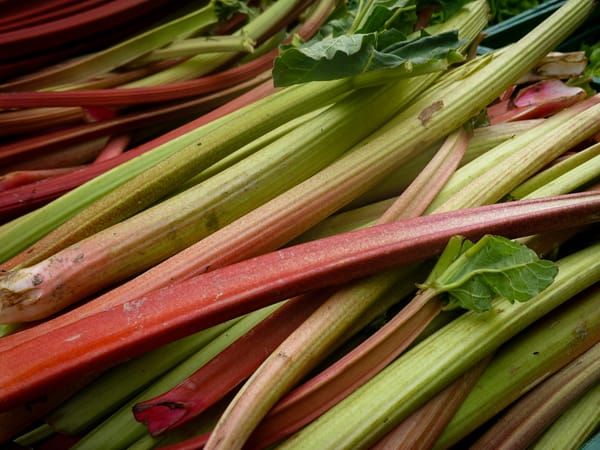
Rhubarb is a perennial vegetable that is among the first crops ready for harvest in spring. A single plant usually provides enough for any family, and plants can live fifteen or more years with good care.
Harvest signs
Begin picking stalks as soon as they have reached their full length (12 inches to as long as two feet depending on variety). Wait until the second season before harvesting (third season if started from seed). Harvest season lasts until the end of June.
▶Planting reference— Depth, spacing, light
Depth
Plant seedlings, divisions, and potted plants at the same depth they are growing in the pot. Plant bare-root plants with the crown of the plant just level with the soil. Prepare soil by tilling or forking to a depth of at least two feet.
Rhubarb curculio:Dark-colored, snouted beetle about one-half to three-fourths of an inch long that bores holes into the crown and stalks.↗
Stalk borers:Similar boring damage to crown and stalks as rhubarb curculio.↗
Common diseases · 4
Root rot (root-rotting fungi):Soil-dwelling pathogens invade the plant in wet years or on poorly drained sites.↗
Leaf spot (Ascochyta rhei):Leaf spot disease common in Minnesota; managed by selective harvesting of infected stalks and removing/destroying all leaves after first hard frost.↗
Leaf spot (Ramularia rhei):Leaf spot disease common in Minnesota; managed by selective harvesting of infected stalks and removing/destroying all leaves after first hard frost.↗
Virus:Abnormal growth, loss of vigor, or unusual leaf coloration.↗
Tip: Stalks only — leaves toxic. Harvest after 2nd year.
Common questions
How much water does rhubarb need?
Rhubarb is water-sensitive — shallow roots and a steady thirst. Keep soil moisture in roughly the 35–55% range and don't let it dry out fully, or growth stalls and leafy crops turn bitter.
Can I grow rhubarb in a raised bed or container?
Rhubarb is a perennial that stays put for years, so give it a permanent in-ground spot or a large, deep container it can live in long-term.
Does rhubarb come back every year?
Yes — rhubarb is a perennial. Plant it once and it comes back each year, so pick a spot it can keep for several seasons.