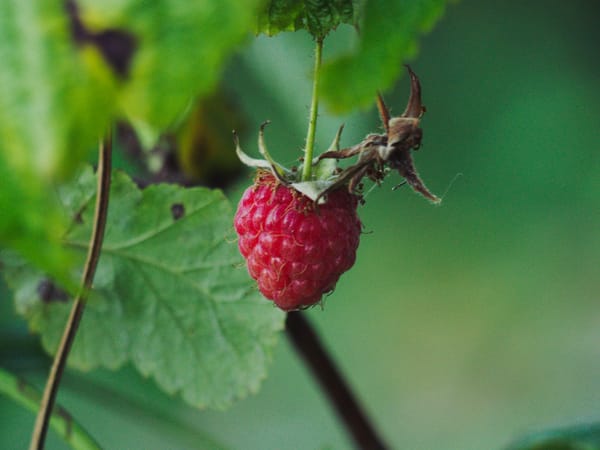
Raspberry plants have perennial roots and crowns, but their canes live for only two summers; they require annual pruning to keep plants productive and reduce disease, and need 1 to 1.5 inches of water per week from flowering until harvest.
Harvest signs
Raspberries are ready to pick when their color is fully developed and the fruit is plump and tender; another indicator is when the fruit comes off the plant easily when gently pulled
▶Pests & diseases— spotted wing drosophila, sap beetles, multicolored asian lady beetle, corn rootworm, +10 more
Common pests · 11
Spotted Wing Drosophila:Invasive fruit flies lay eggs in ripening and ripe fruit, leading to mushy berries↗
Sap Beetles:Small beetles attracted to the smell of overripe fruit↗
Multicolored Asian Lady Beetle:Found feeding on fruit; beetles have few or many spots with a black 'M' shape on the white band between head and body (Fall, especially near soybean fields)↗
Corn Rootworm:Slender beetles (quarter inch, yellow to tan to green) burrow into underripe and fully ripe fruit, destroying berries; often found feeding in groups (Late summer)↗
Yellowjackets:Wasps with yellow and black stripes attracted to overripe fruit (Fall)↗
Japanese Beetles:Gleaming bronze and bright green beetles feeding and congregating on foliage (Mid-summer (June through August))↗
Flat-headed Cane Borers (red-necked cane borer, bronze cane borer):Scarring on raspberry canes, tip dieback, and cane death; adults are small, metallic, and slender; larvae feed inside canes causing galls and dead canes↗
Spider Mites:Underside of leaves takes on a bronze color (Hot weather (June through August))↗
Potato Leafhopper:Curling, yellowing, and stunting of younger leaves; adults are elongated, small (1/8 inch), and wedge-shaped (Hot, dry weather)↗
Rabbits:Canes eaten down to the ground or snow line (Winter)↗
Common diseases · 3
Cane Blight:Disease lesions near the base of the cane cut off water and nutrient transport, causing cane dieback↗
Gray Mold:Raspberry fruit rots and becomes moldy while still on the plants; in ripe fruit may not appear until after picking and spreads quickly in a container↗
Phytophthora Crown and Root Rot:Canes die back due to infection at the crown or base; brown discoloration on the outside and inside of the crown; thrives in wet soils↗
Companions & antagonists
Keep apart from:Blackberry
Tip: Zone 5b hardy. Prune canes after fruiting.
Common questions
How much water does raspberry need?
Raspberry is water-sensitive — shallow roots and a steady thirst. Keep soil moisture in roughly the 45–65% range and don't let it dry out fully, or growth stalls and leafy crops turn bitter.
Can I grow raspberry in a raised bed or container?
Raspberry is a perennial that stays put for years, so give it a permanent in-ground spot or a large, deep container it can live in long-term.
Does raspberry come back every year?
Yes — raspberry is a perennial. Plant it once and it comes back each year, so pick a spot it can keep for several seasons.