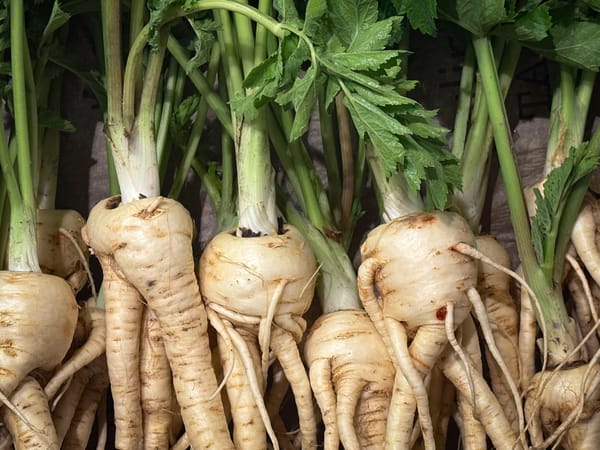
Growing notes
Parsnips are a long-season crop that takes 100-120 days to mature and grow best in sandy loam soil. Always plant seeds directly into your garden and never start them in pots as their long taproots begin developing early.
Harvest signs
UMN Extension ↗Leave parsnips in the ground until late fall or even early spring. Cold soil temperatures influence the flavor of the roots, increasing the sugar content. The later you dig out the roots, the sweeter they will be.
▶Planting reference— Depth, spacing, pH, light
▶Pests & diseases— cutworms, root maggots, aster yellows
Companions & antagonists
Common questions
How much water does parsnip need?
Parsnip has middle-of-the-road water needs. Aim to keep soil moisture around 30–50%, letting the top inch dry slightly between waterings rather than staying soggy.
Can I grow parsnip in a raised bed or container?
Yes — parsnip does well in raised beds and is happy in a decent-sized container too, as long as drainage is good.
Does parsnip come back every year?
No — parsnip is an annual. It completes its life in one season, so you replant it each year.