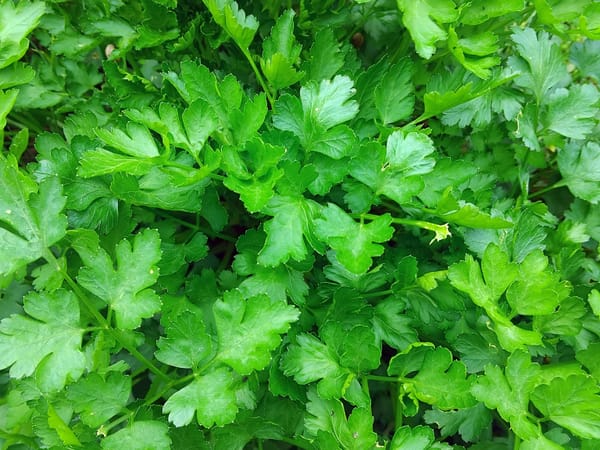
Growing notes
Lovage belongs to the carrot family (Apiaceae) and has an upright, leggy habit; it requires somewhat more moist conditions and deeper, looser soil. Avoid heavy clay soils and wet areas that have a high nutrient content, as rich soils may hurt quality by promoting rapid, lush growth with only small amounts of essential oils.
Harvest signs
Harvest culinary herbs throughout the growing season by snipping sprigs and leaves as needed. Many herbs will have the best flavor if harvested just before flowering. For carrot-family herbs (which includes lovage), cut each leaf stalk at the base of the plant; flowering signals the end of the plant's life and the flavor of the foliage may not be as pleasant once the plant flowers.
Companions & antagonists
Common questions
How much water does lovage need?
Lovage has middle-of-the-road water needs. Aim to keep soil moisture around 30–55%, letting the top inch dry slightly between waterings rather than staying soggy.
Can I grow lovage in a raised bed or container?
Lovage is a perennial that stays put for years, so give it a permanent in-ground spot or a large, deep container it can live in long-term.
Does lovage come back every year?
Yes — lovage is a perennial. Plant it once and it comes back each year, so pick a spot it can keep for several seasons.