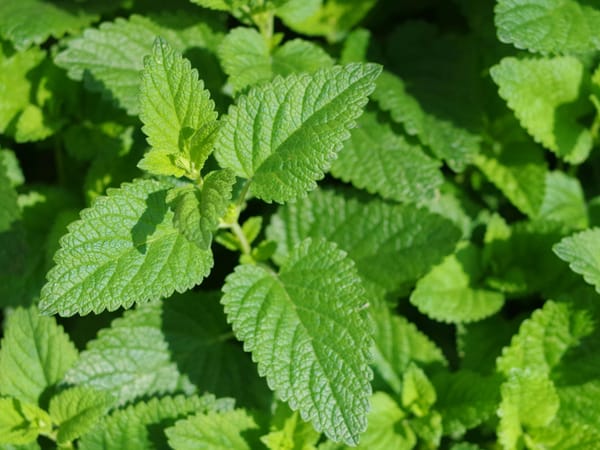
Growing notes
Most herbs require at least six hours of direct sunlight in order to grow well, and the majority need well-drained soil with a pH range of 6.0-7.5; avoid heavy clay soils, wet areas, and soils with high nutrient content. Hardy perennial herbs in the mint family, which includes lemon balm's relatives, can become invasive and are bushy with some tolerance of excessive heat and dry soil.
Harvest signs
Harvest culinary herbs throughout the growing season by snipping sprigs and leaves as needed. Many herbs will have the best flavor if harvested just before flowering.
Companions & antagonists
Common questions
How much water does lemon balm need?
Lemon Balm is water-sensitive — shallow roots and a steady thirst. Keep soil moisture in roughly the 30–55% range and don't let it dry out fully, or growth stalls and leafy crops turn bitter.
Can I grow lemon balm in a raised bed or container?
Lemon Balm is a perennial that stays put for years, so give it a permanent in-ground spot or a large, deep container it can live in long-term.
Does lemon balm come back every year?
Yes — lemon balm is a perennial. Plant it once and it comes back each year, so pick a spot it can keep for several seasons.