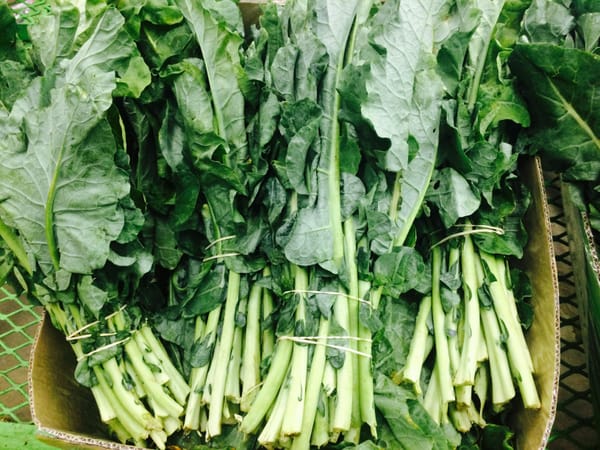
Cool-season brassica that's noticeably more heat-tolerant than kale or cabbage. Cold-hardy and will continue producing well past the first fall frosts. Best quality comes from fast, even growth without heat or moisture stress; uneven watering can make leaves bitter or tough.
Harvest signs
Harvest individual outer leaves once they are large enough to use, leaving the center bud and inner leaves to keep producing. Flavor improves after a light frost — sugars concentrate as the plant slows. Whole-plant harvest also works once the plant reaches mature size.
Black rot:causes yellow triangles on the edge of leaves↗
Clubroot:attacks the roots of kale and collards, causing roots to be swollen and plants to be stunted↗
Companions & antagonists
Plant near:DillMarigold
Keep apart from:Tomato
Tip: Harvest improves after light frost. Cut outer leaves; the center keeps producing.
Common questions
How much water does collards need?
Collards is water-sensitive — shallow roots and a steady thirst. Keep soil moisture in roughly the 35–55% range and don't let it dry out fully, or growth stalls and leafy crops turn bitter.
Can I grow collards in a raised bed or container?
Yes — collards does well in raised beds and is happy in a decent-sized container too, as long as drainage is good.
Does collards come back every year?
No — collards is an annual. It completes its life in one season, so you replant it each year.