Growing notes
Chinese cabbage and bok choy are fall crops best planted in mid-summer (July) so they mature in the cooler temperatures of September; they require consistent soil moisture and nutrients throughout growth, as inconsistent watering leads to poor texture, bitterness, and failure to form heads.
Harvest signs
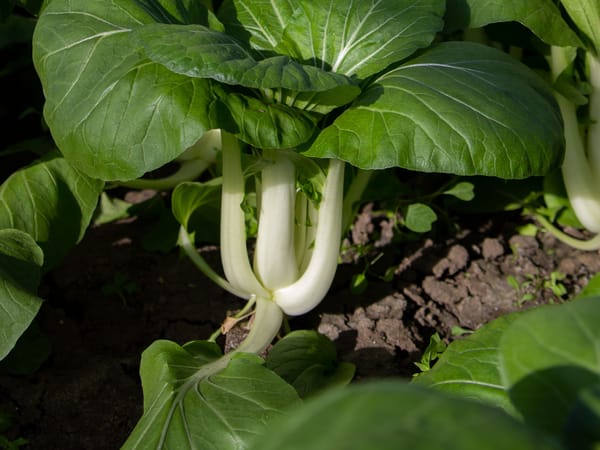
For bok choy, harvest a few leaves at a time picking the oldest, largest leaves from the outside, or wait for the head to reach mature size (dwarf varieties about six inches tall, full-sized about a foot tall) and cut while the oldest leaves are still tender; harvest the whole plant before flowers open if bolting begins. For Chinese cabbage, harvest when heads feel firm and dense when pressed.
▶Planting reference— Depth, spacing, pH
▶Pests & diseases— flea beetles, imported cabbageworm, cabbage looper, and diamondback moth larvae, cabbage maggots, alternaria, +2 more
Companions & antagonists
Common questions
How much water does bok choy need?
Bok Choy is water-sensitive — shallow roots and a steady thirst. Keep soil moisture in roughly the 40–60% range and don't let it dry out fully, or growth stalls and leafy crops turn bitter.
Can I grow bok choy in a raised bed or container?
Yes — bok choy does well in raised beds and is happy in a decent-sized container too, as long as drainage is good.
Does bok choy come back every year?
No — bok choy is an annual. It completes its life in one season, so you replant it each year.